
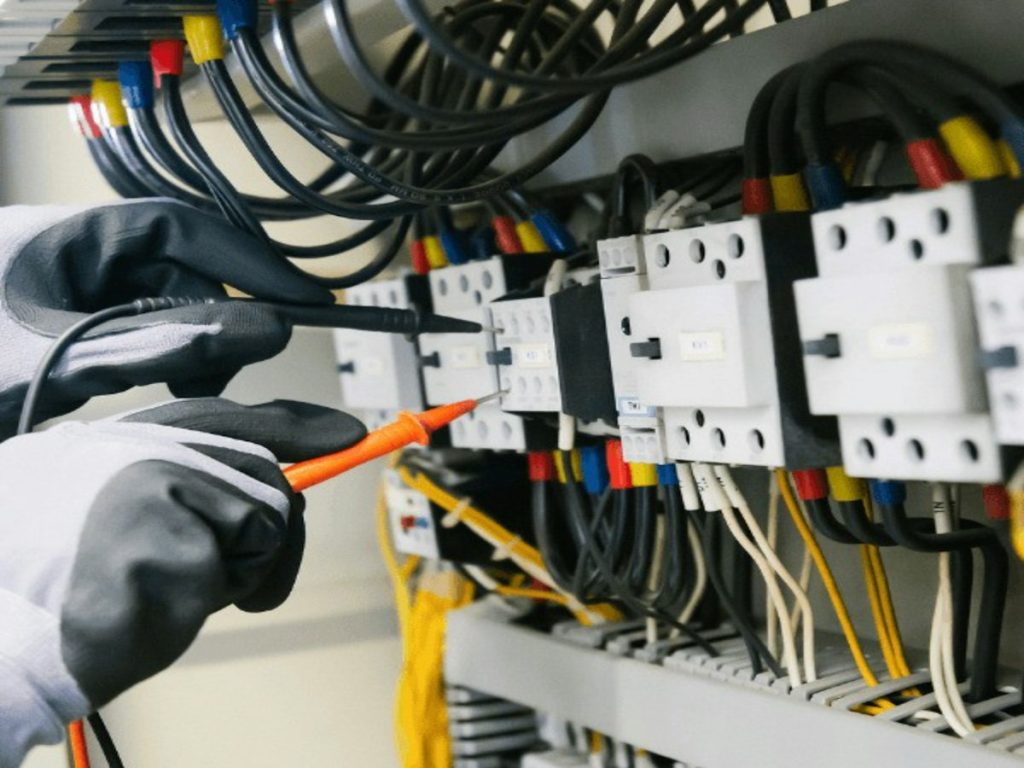
A UPS only protects your equipment if it works at the moment of a power failure. Batteries, capacitors and fans wear out with age and heat, often without warning. Regular preventive maintenance finds these problems early, so they can be fixed during a planned visit instead of during an outage.
| Check | What we do |
|---|---|
| Visual inspection and cleaning | Check for heat damage, loose connections, dust and leaks |
| Battery test | Measure battery voltages and condition; identify weak batteries |
| Capacitor check | Inspect AC and DC capacitors for swelling or leakage |
| Fans and filters | Check operation and clean or replace |
| Alarms and event log | Review alarms, faults and transfer history |
| Function test | Confirm the UPS runs on battery and transfers correctly |
| Load bank test | Optional full-load test with a load bank |
| Service report | Written report with findings and recommendations |
Most UPS manufacturers recommend at least one preventive maintenance visit a year, and more often for critical sites or harsh environments. After the first inspection we can recommend a maintenance schedule that suits your site and the age of your UPS.
When tests show weak batteries, we supply and replace UPS batteries and dispose of the old ones. Replacing a full string at the same time keeps the battery bank balanced.
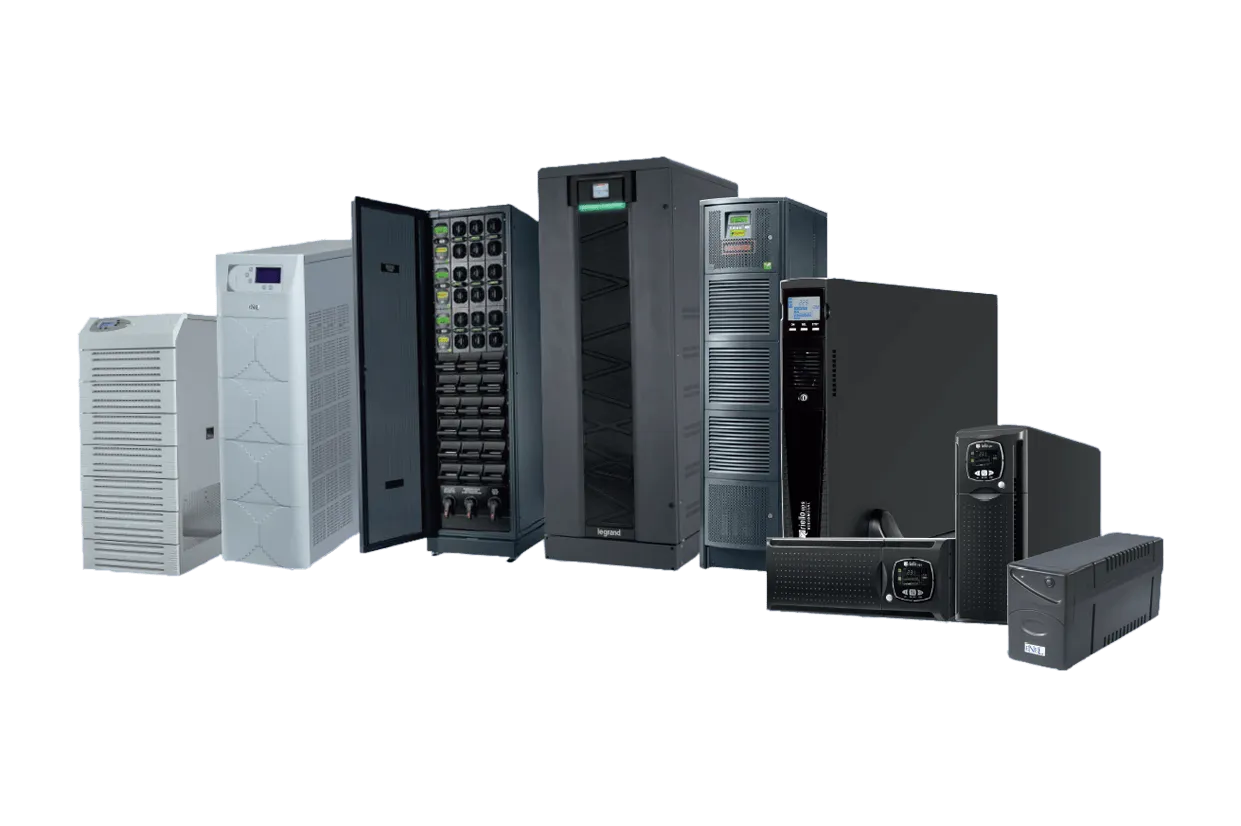
Send us the UPS brand, model, kVA rating and location, and we will confirm the scope of the maintenance visit.
See also: UPS systems · all engineering services
Request a quote or call +65 6397 5218.
| Component | Why it ages | What maintenance checks |
|---|---|---|
| Batteries | Chemical ageing, heat and discharges | Voltage, condition and runtime |
| DC capacitors | Electrolyte dries out over time | Swelling, leakage, ripple |
| AC capacitors | Heat and voltage stress | Condition and failure signs |
| Cooling fans | Bearings wear out | Noise, speed and airflow |
| Connections | Heat cycling loosens terminals | Tightness and signs of overheating |
Preventive maintenance applies to both small single-phase UPS units in offices and large three-phase UPS systems in data centres, factories and marine installations. Larger systems usually need more detailed checks, longer function tests and load bank testing to confirm full-load performance.
| Site type | Why UPS maintenance matters |
|---|---|
| Offices and server rooms | Protects IT systems, data and phone systems from outages |
| Data centres | Keeps critical loads running; often uses dual UPS and static transfer switches |
| Factories | Prevents production stoppages and damage to process equipment |
| Hospitals and labs | Protects life-safety and sensitive medical equipment |
| Marine and offshore | Keeps navigation, communication and control systems powered |
Without regular checks, batteries can age unnoticed until the UPS fails to support the load during a power cut. Dust can block cooling, fans can stop, and capacitors can dry out, causing alarms, overheating or an unexpected shutdown. Small faults such as loose connections can also lead to heat damage. A failed UPS can mean lost data, damaged equipment and expensive downtime, often far more costly than the maintenance itself.
After each visit, a written report records what was checked, the battery and system readings, any faults found and the recommended actions. Keeping these reports helps track the condition of the UPS over time and plan battery and component replacements before they fail.
A function test on battery shows that the UPS switches correctly, but only a test at or near full load proves that the UPS and its batteries can really support the connected equipment for the expected time. Load bank testing connects a controlled load to the UPS output so the system can be tested without risking the live IT or process load. It is often done during commissioning, after battery replacement or as part of an annual maintenance plan for critical sites.
Further reading: Uninterruptible power supply (Wikipedia)
Related: Guide: when to replace UPS batteries · Guide: load bank testing
Most UPS manufacturers recommend at least one preventive maintenance visit a year, with more frequent visits for critical loads or hot and dusty locations.
A typical visit covers visual inspection and cleaning, battery testing, capacitor and fan checks, alarm and event log review, a functional test, and a written service report.
Battery problems are the most common cause, because UPS batteries slowly lose capacity with age and heat. Regular battery testing finds weak batteries before an outage.