
By Aflex Wheeltronics team
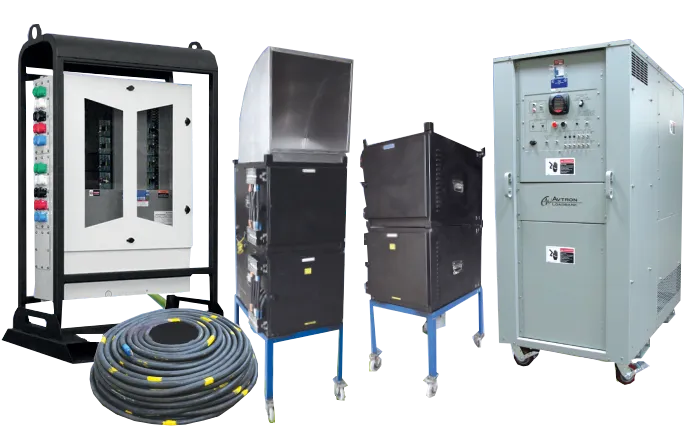
Standby generators and UPS systems sit idle most of the time. A short monthly run with little or no load shows that the engine starts, but it does not prove the system can carry the building when the mains supply fails. A load bank fills that gap by applying a real, adjustable load in a safe and controlled way.
| Type | What it tests | Typical use |
|---|---|---|
| Resistive (AC) | Real power (kW) at unity power factor | Generator and UPS testing, the most common type |
| Reactive / inductive | Real and reactive power at a set power factor (e.g. 0.8) | Testing generators as they will run with motor loads |
| DC load bank | DC discharge of batteries and rectifiers | UPS battery runtime and telecom DC systems |
| Portable | Small to medium ratings | Server rooms, offices, single generators |
| Containerised | Megawatt-scale loads | Large generators and data centres |
For a UPS, the load bank is connected to the output while the critical load is on bypass or another supply. The test shows whether the inverter carries full load, whether the transfer works correctly and how long the batteries really last. It is often combined with UPS preventive maintenance or done after a UPS battery replacement.
| Situation | Typical approach |
|---|---|
| Critical sites (data centres, hospitals, utilities) | At least yearly, often with monthly loaded runs |
| Commercial buildings | Yearly, or when monthly runs are lightly loaded |
| After repairs or major servicing | Before the system is returned to service |
| New installations | At commissioning and handover |
Many facilities refer to standards such as NFPA 110 for generator testing. Your maintenance contract, insurer or building authority may also set specific requirements.
Aflex Wheeltronics rents and sells AC and DC load banks from 0.5kW to 1MW, with power cables and portable distribution panels. Tell us the generator or UPS rating, voltage and site location and we will recommend a suitable set-up, or contact us for a quote.
Related: Load bank rental & sales · UPS preventive maintenance · Load bank (Wikipedia)
Many facilities run a load bank test at least once a year, and after major repairs. Sites that rarely load the generator during monthly runs often test more frequently to prevent wet stacking.
A common approach is to step the load up in stages, for example 25%, 50%, 75% and 100% of the generator or UPS rating, and hold the final stage long enough for temperatures to stabilise.
Yes. A load bank connected to the UPS output can test the inverter at full load and prove the battery runtime, without risking the live IT or process load.