
By Aflex Wheeltronics team
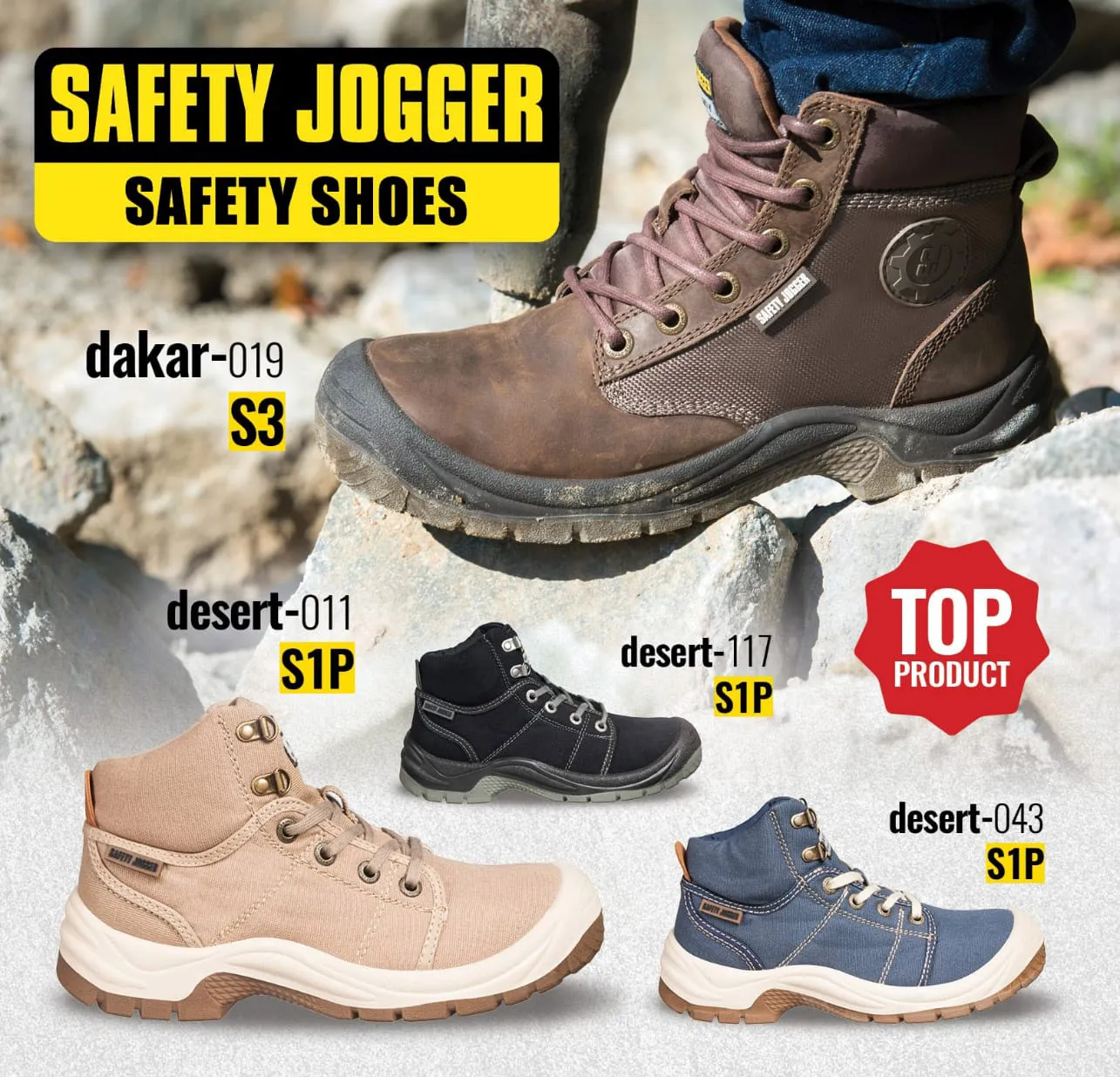
Safety shoes are one of the most used pieces of personal protective equipment on any site, and one of the most often neglected. A shoe with the wrong rating, a poor fit or a worn-out sole gives far less protection than its label suggests. This guide covers how to choose safety shoes for common work environments in Singapore, how to get the right fit, and when to replace them.
Safety footwear is rated under the European standard EN ISO 20345. The rating tells you which protections the shoe has. For a full explanation of S1P, S3 and SRC, see our Safety Jogger safety shoes page.
| Work environment | Main hazards | Suggested rating |
|---|---|---|
| Warehouses, workshops, dry factories | Falling objects, dry floors | S1P SRC |
| Construction sites | Nails, rough ground, rain | S3 SRC |
| Shipyards and marine work | Water, oil, slippery steel | S3 SRC |
| M&E and facility maintenance | Mixed indoor and outdoor work | S3 SRC, or S1P for dry indoor work |
| Kitchens and food factories | Wet, greasy floors | Slip-resistant (SRC) with a water-resistant upper |
A poorly fitting safety shoe is uncomfortable, causes blisters and is more likely to be taken off on site. When fitting:
On busy construction, marine and workshop sites, safety shoes often need replacing every 6 to 12 months. Keeping a simple issue date record for each worker makes replacement easier to plan.
For company orders, collect each worker’s size and the site type before ordering, and keep a small stock of common sizes for new staff and replacements. Ordering one model across a team also makes stock and replacement simpler.
Aflex Wheeltronics supplies Safety Jogger safety shoes: the Dakar (S3 SRC) for wet, outdoor and marine work and the Desert (S1P SRC) for dry indoor work, both with a steel toecap and steel midsole, in sizes 38 to 47. Contact us with the model, sizes and quantity for a quote.
Related: Safety Jogger safety shoes · Safety footwear (Wikipedia)
There is no fixed date. Replace safety shoes when the sole is worn smooth or cracked, the upper is split, the toecap is exposed or has taken a heavy impact, or the shoe no longer fits well. On heavy-use sites this is often every 6 to 12 months.
They should feel firm but not tight. Leave about a thumb’s width between the longest toe and the end of the shoe, make sure the toes do not touch the toecap, and check that the heel does not lift when walking.
Wipe them clean with a damp cloth and mild soap, remove the insole to dry, and let them air dry away from direct heat. Do not put safety shoes in a washing machine or dry them on a heater, as this can damage the sole bond and materials.